Logistics and Supply Chain: Monitoring Carrier Tracking and Rate Pages

Snapshot Site Team
17 Mar 2025 - 02 Mins read
Shipping and logistics operations lean heavily on pages they don't control — a carrier's tracking page embedded or linked from a customer-facing order status screen, a rate calculator used to quote shipping costs at checkout. When a carrier redesigns their tracking page or a rate calculator starts rendering wrong, the failure shows up as a support ticket or a pricing error long before anyone traces it back to a third-party page change.
Where This Comes Up
- Tracking page layout changes. A carrier redesign can break an integration that scrapes or embeds their tracking page, or simply confuse customers who expect a familiar layout.
- Rate calculator accuracy. A shipping rate calculator that renders wrong — missing a service tier, showing a stale rate — costs either lost sales or under-quoted shipments.
- Multi-carrier consistency. Confirming tracking and rate pages render correctly across every carrier a logistics operation depends on, not just the primary one.
- Peak-season resilience. Carrier pages under heavy holiday-season traffic are more likely to show degraded or broken rendering than during a normal month.
Capturing a Carrier Page
curl --request POST \
  --url https://api.prod.ss.snapshot-site.com/api/v1/screenshot \
  --header 'Content-Type: application/json' \
  --header 'x-snapshotsiteapi-key: YOUR_API_KEY' \
  --data '{
    "url": "https://example-carrier.com/track/1Z999AA10123456784",
    "format": "png",
    "width": 1440,
    "fullSize": true,
    "hideCookie": true
  }'
Turning Captures Into a Monitor
Compare each new capture of a rate calculator or tracking page template against a stored baseline to catch a rendering change before it affects a real shipment:
curl --request POST \
  --url https://api.prod.ss.snapshot-site.com/api/v3/compare \
  --header 'Content-Type: application/json' \
  --header 'x-snapshotsiteapi-key: YOUR_API_KEY' \
  --data '{
    "before": {"imageUrl": "https://cdn.example.com/baselines/carrier-tracking-template.png"},
    "after": {"url": "https://example-carrier.com/track/1Z999AA10123456784", "width": 1440, "fullSize": true, "hideCookie": true},
    "threshold": 0.2
  }'
A wider threshold makes sense for tracking pages specifically, since the actual tracking data (location, timestamps) legitimately differs between any two shipments — the comparison is most useful as a template/layout check, not a pixel-perfect match against a specific package's data.
Building the Watch List Around Peak Periods
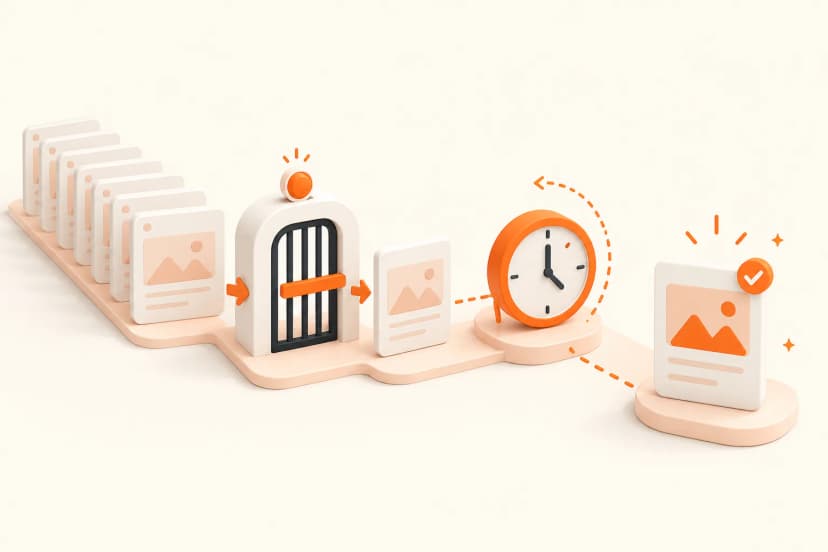
The practical setup is a small watch list per carrier — a representative tracking page and the rate calculator's main entry point — checked on a normal cadence most of the year and tightened during known peak shipping periods, when a rendering failure both happens more often and costs more.
What This Catches That a Carrier API Status Page Doesn't
A carrier's own status page reports on their API and service uptime, not on how their public tracking or rate pages actually render for an end user. A visual check catches exactly the gap in between: the carrier's systems are healthy, but the page a customer sees is broken.
For logistics and e-commerce operations dependent on carrier-facing pages, Snapshot Site turns a blind spot into something checked automatically, before a customer notices first.